
 By James Anderson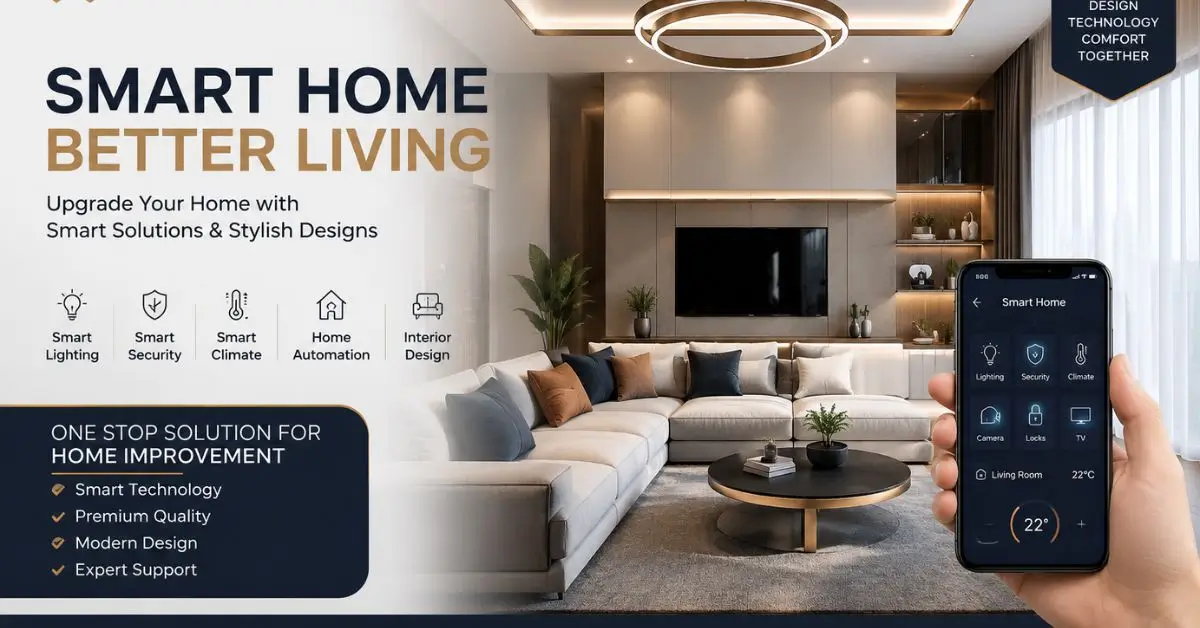
Most smart home upgrades start with enthusiasm and end with frustration. A voice assistant that does not understand you. Lights that respond three seconds late. A thermostat that looks like a spaceship landed on your wall. Devices from different brands that refuse to work together.
The problem is not the technology itself. The problem is that most people approach smart home upgrades as pure technology purchases without thinking about how those devices will fit into the actual design and daily life of their home.
Smart home decoradtech changes that approach. It treats technology and home design as connected rather than separate, so the upgrades you make actually improve how your home looks and functions rather than just adding gadgets that create new problems.
This guide covers what smart home decoradtech means in practice, which upgrades deliver the most value across different rooms, how to choose devices that work together, and what to realistically expect to spend at different budget levels.
Smart home decoradtech refers to the intentional integration of smart home technology into home design and decor in a way that enhances both function and aesthetics. Rather than treating devices as standalone gadgets, this approach considers how technology fits the visual style of a space, how it improves daily routines, and how different systems connect to create a cohesive, well-functioning home environment.
Smart home decoradtech is about integrating technology into your home design thoughtfully, not just installing gadgets. The best upgrades improve both how your home functions and how it looks. Start with lighting and a smart thermostat, choose one ecosystem, and build from there. This guide covers the practical details for every room and every budget.
Before getting into specific recommendations, it helps to understand why so many smart home projects deliver less than expected. The reasons are consistent and almost entirely avoidable.
Buying devices without a plan
Most people start by buying one smart product that catches their attention, then another, then another, without thinking about how they will all work together. After a year, they have five different apps, three different ecosystems, and a collection of devices that do not communicate with each other.
Ignoring aesthetics
A smart home device that looks out of place in your room creates visual friction every time you see it. Technology that blends into your home’s design, or even enhances it, creates a fundamentally better experience than technology that just sits there looking like hardware.
Overcomplicating the setup
The appeal of smart home technology is simplicity and convenience. A setup that requires a fifteen-step process to turn off the lights defeats the purpose entirely. The best smart home upgrades make daily tasks easier, not more complicated.
Underestimating integration requirements
Devices that work perfectly in isolation often create problems when you try to connect them. Understanding which devices work within the same ecosystem before you buy saves significant time and money.
The decoradtech approach to smart home design starts with the home first and the technology second. Instead of asking what smart devices are available, it asks what your home needs and which technology serves those needs without compromising the design you have worked to create.
This means choosing devices that fit visually into their surroundings. A smart light switch that matches your existing switch plates. A thermostat with a display design that complements your wall color. Smart speakers in finishes that match your furniture rather than standing out as obvious tech products.
It also means thinking about ecosystems before individual devices. The three main smart home platforms in the US are Amazon Alexa, Google Home, and Apple HomeKit. Each has strengths and works best with different device brands. Choosing one as your primary platform before buying anything else prevents the fragmented, multi-app problem that frustrates most smart homeowners.
Here is how to approach smart home technology in each main area of your home, with both functional and design considerations for each space.
Living Room
The living room is usually the best starting point for smart home upgrades because it is where you spend the most time and where visible technology has the most impact.
Smart lighting is the highest-value living room upgrade. Dimmer-compatible smart bulbs or smart switches allow you to create different lighting scenes for watching movies, entertaining, reading, or relaxing without touching a switch. Brands like Philips Hue and LIFX offer bulbs in warm tones that enhance rather than disrupt the atmosphere of the room.
A smart speaker or display in a finish that matches your decor serves as the control hub for everything else. Placing it thoughtfully on a shelf or side table where it fits naturally rather than in the center of the room keeps the tech from dominating the visual space.
Smart blinds or automated shades are a more significant investment but transform both the function and feel of a living room. Being able to adjust natural light with a voice command or a scheduled routine adds a level of polish that makes the whole room feel more considered.
Bedroom
The bedroom is about comfort, sleep quality, and morning routines. Smart home technology here should support rest rather than add stimulation.
A smart thermostat with a bedroom schedule lets you automatically lower the temperature at night and warm the room before your alarm goes off. Research consistently supports cooler temperatures for better sleep quality, and automating this removes one more thing to think about at bedtime.
Smart bulbs with warm, dimmable lighting and a wake-up light routine that gradually brightens rather than shocking you awake make mornings noticeably easier. This is a small upgrade with a disproportionately positive daily impact.
A smart plug on your bedside lamp allows voice or app control without replacing the lamp itself, which is a cost-effective way to add smart functionality while keeping the design elements you already have.
Kitchen
The kitchen benefits most from smart technology that supports cooking and daily routines without getting in the way of a busy, active space.
Smart displays in the kitchen allow hands-free recipe viewing, video calls, and timer management while cooking. A display mounted under a cabinet keeps the counter clear and the technology out of the visual focal points of the room.
Smart plugs on appliances like the coffee maker allow you to schedule your morning brew from bed. A smart sensor for smoke or CO detection adds safety without requiring a full alarm system overhaul.
Under-cabinet smart lighting with adjustable color temperature improves both task lighting quality and the visual warmth of the kitchen in the evening.
Home Office
For anyone working from home, the office is where smart technology has the most direct productivity impact.
Smart lighting with color temperature control reduces eye strain during long work sessions. Setting warmer tones in the morning and shifting to cooler daylight tones during peak work hours is a genuine focus improvement that most people notice within a week of implementing it.
A smart power strip manages all desk devices from a single control point, eliminating phantom power draw from idle devices and simplifying the end-of-day shutdown routine.
Smart blinds in a home office are particularly valuable for managing screen glare throughout the day without needing to leave your desk.
Entryway and Security
The entryway is where smart home technology intersects most directly with home security and daily convenience.
A smart lock eliminates the need for physical keys and allows you to grant access remotely, check whether the door is locked from anywhere, and set automatic lock schedules. Schlage and Yale both offer smart locks in finishes that complement most door hardware styles.
A smart video doorbell like Ring or Google Nest Hello adds security visibility without requiring a full camera system installation. Modern versions are designed to look like standard doorbells rather than obvious security hardware.
A smart indoor camera positioned discreetly provides additional security visibility while home is empty. Placement and design choice matter here; a well-chosen camera in a natural position is far less visually intrusive than a cheap camera mounted obviously in a corner.
This decision matters more than any individual device choice. Picking one primary ecosystem and buying compatible devices within it creates a unified, well-functioning system. Mixing ecosystems creates complexity.
| Ecosystem | Works Best With | Voice Assistant | Strengths |
|---|---|---|---|
| Amazon Alexa | Wide range of third-party devices | Alexa | Broadest device compatibility |
| Google Home | Google Nest devices, Android users | Google Assistant | Strong automation and search integration |
| Apple HomeKit | Apple device users | Siri | Strong privacy, seamless Apple integration |
| Matter Protocol | Cross-platform compatible devices | Any | Emerging standard for multi-ecosystem use |
For most US homeowners without a strong existing brand preference, Amazon Alexa offers the broadest device compatibility and the most straightforward setup. For Apple users who already have an iPhone, iPad, and Mac, HomeKit creates the most seamless integration with their existing devices.
The emerging Matter protocol is worth knowing about. It is a new connectivity standard that allows devices to work across all major ecosystems without brand lock-in. As more devices adopt Matter, the ecosystem choice becomes less critical, but for now it is still the most important early decision.
Smart home technology spans an enormous price range. Here is what realistic investment looks like at different levels.
Entry level ($200 to $500)
Smart bulbs or a smart switch in the main living area, a smart speaker as a control hub, and a smart plug or two for appliances. This level transforms daily convenience without significant investment and serves as a foundation to build on.
Mid-level ($500 to $1,500)
Smart thermostat, smart locks, a video doorbell, expanded smart lighting across multiple rooms, and a smart display. This level covers the most impactful upgrades that improve both daily life and home security.
Comprehensive ($1,500 to $5,000+)
Automated blinds, whole-home audio, integrated security cameras, smart irrigation, and full-room lighting scenes. This level transforms how the home functions and requires thoughtful installation planning to do well.
A homeowner in Austin, Texas, working through a kitchen and living room renovation might budget $800 for smart lighting, a thermostat, and a smart display and see meaningful improvement in both daily convenience and the feel of the renovated spaces.
Buying based on price alone
The cheapest smart devices often have the worst app experiences, shortest product lifespans, and poorest ecosystem integration. Mid-range devices from established brands consistently outperform budget alternatives in reliability and longevity.
Ignoring the router
Smart home devices depend entirely on your home network. A weak or unreliable Wi-Fi connection creates problems that no amount of device quality can compensate for. Upgrading to a mesh Wi-Fi system before adding smart home devices prevents most connectivity issues before they start.
Not involving the whole household
Smart home technology only improves daily life if everyone in the household uses it comfortably. Systems that feel overly technical or require too many steps to operate get abandoned. The best setups are simple enough that every household member uses them without thinking about it.
Smart home decoradtech is not about having the most devices or the most advanced technology. It is about making thoughtful choices that improve how your home actually functions and feels on a daily basis.
Start with one ecosystem, invest in the upgrades that affect your daily life most directly, and prioritize devices that fit your home’s visual design rather than competing with it. Build gradually and test each addition before moving to the next.
If this guide was helpful, explore our related articles on how to choose the right smart thermostat for your home and the best smart lighting options for every room. Both give you the next layer of practical detail for building a smart home that works the way it should.
It refers to integrating smart home technology into your home in a way that enhances both function and design. Devices are chosen to fit your space visually and work together as a connected, comfortable system rather than isolated gadgets.
Start with smart lighting and a smart thermostat. Both deliver immediate comfort and efficiency improvements and form a natural foundation for expanding into other smart home categories over time.
Amazon Alexa offers the broadest device compatibility for most US homeowners. Apple HomeKit suits Apple device users. Google Home works best for Android users and those already using Google services.
A basic setup runs $200 to $500. A mid-level setup with a thermostat, locks, and doorbell typically costs $500 to $1,500. Full home automation with automated blinds and whole-home audio can exceed $5,000.
Most require an active internet connection for voice control and remote access. Some retain basic local functionality offline, but cloud-dependent features stop working without internet.
They can increase buyer appeal, but direct impact on appraised value varies. Professionally installed, well-integrated systems add more value than a collection of mismatched standalone devices.