 By James Anderson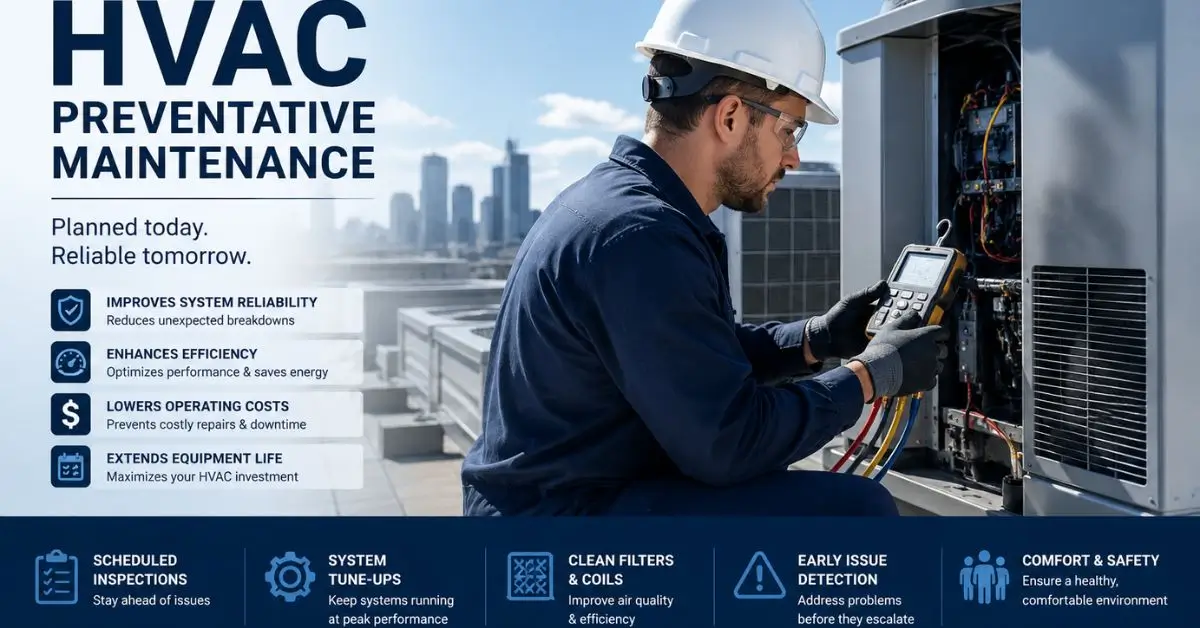
Most homeowners only think about their heating and cooling system when something goes wrong. That is also when repairs cost the most. A blown compressor in the middle of August or a furnace that fails on the coldest night of the year is never a small bill.
The truth is that most HVAC failures do not happen out of nowhere. They build up slowly through dust, dirt, worn parts, low refrigerant, and small issues that get worse over months. Catching these things early is what separates a system that lasts 20 years from one that needs replacement in 10.
This guide covers everything you need to know about HVAC preventative maintenance, including what it involves, what you can do yourself, what needs a professional, how often to schedule service, and what to expect to spend. By the end, you will have a clear plan for keeping your system running well year after year.
HVAC preventative maintenance is the routine inspection, cleaning, and servicing of heating, ventilation, and air conditioning systems to keep them running efficiently and prevent breakdowns. It includes tasks like changing filters, cleaning coils, checking refrigerant levels, testing safety controls, and inspecting electrical connections. Done regularly, it extends system lifespan, lowers energy bills, and reduces the risk of expensive emergency repairs.
HVAC preventative maintenance keeps your heating and cooling system running efficiently and helps avoid expensive repairs. Most homes need professional service twice a year, plus simple DIY tasks like filter changes every one to three months. Annual maintenance typically costs $150 to $300 and pays for itself many times over through lower energy bills and longer system life.
A central HVAC system is one of the most expensive pieces of equipment in your home. Replacing one can run anywhere from $5,000 to over $15,000, depending on size, type, and region. Anything you can do to extend the life of your existing system protects a major investment.
Maintenance also affects your monthly energy bills. A system clogged with dirt, with low refrigerant, or with worn components has to work harder to deliver the same heating or cooling. That extra effort shows up directly on your electric or gas bill, often without the homeowner realizing why their costs keep climbing.
There is also the comfort factor. A neglected system does not just cost more; it performs worse. Uneven temperatures, weak airflow, longer warmup or cooldown times, and increased humidity issues are all signs of a system that needs attention.
Finally, manufacturer warranties on most HVAC equipment require documented annual maintenance. Skipping that maintenance can void your warranty entirely, leaving you on the hook for repairs that should have been covered.
A proper maintenance visit covers far more than just a quick filter swap. Here is what a complete service typically involves.
Inspection of all major components
The technician checks the condition of the blower motor, evaporator coil, condenser coil, electrical connections, and refrigerant lines. Wear on these components shows up early to a trained eye and can be addressed before it causes a breakdown.
Cleaning of coils and condenser
The outdoor condenser unit collects dirt, leaves, grass clippings, and debris over time. The indoor evaporator coil collects dust and biological growth. Both reduce efficiency significantly when dirty. Cleaning them is one of the highest-value parts of any maintenance visit.
Refrigerant level check
Low refrigerant is one of the most common causes of poor cooling performance. A technician measures levels and identifies leaks if the system is low. Catching leaks early prevents bigger problems and protects the compressor from damage.
Electrical testing
Loose connections, worn contactors, and aging capacitors are common failure points. Testing voltage, amperage, and connection integrity catches these issues before they cause a system failure on the hottest or coldest day of the year.
Drain line cleaning
The condensate drain line removes moisture from the cooling process. When clogged, it backs up and can cause water damage or shut the system down entirely. Clearing it during routine maintenance is quick and prevents serious problems.
Thermostat calibration
A miscalibrated thermostat makes the system run longer than necessary or cycle improperly. Calibration during maintenance ensures the system delivers the temperatures you actually set.
Safety control testing
Modern HVAC systems include multiple safety controls to prevent fires, gas leaks, and other hazards. Testing these during maintenance is essential and is something only a qualified technician should handle.
Some maintenance tasks are perfectly fine for homeowners to handle. Others should always be left to a licensed technician. Knowing the difference saves money without putting your system or your safety at risk.
| Task | DIY or Pro | Frequency |
|---|---|---|
| Replace air filter | DIY | Every 1 to 3 months |
| Clean around outdoor unit | DIY | Monthly during use |
| Clean supply and return vents | DIY | Every 3 months |
| Check thermostat batteries | DIY | Annually |
| Listen for unusual sounds | DIY | Ongoing |
| Refrigerant check or refill | Pro | Annually |
| Coil cleaning | Pro | Annually |
| Electrical testing | Pro | Annually |
| Gas line and burner inspection | Pro | Annually |
| Safety control testing | Pro | Annually |
DIY tasks keep the system clean and prevent obvious problems. Professional service handles everything that requires tools, training, or safety expertise that a homeowner does not have.
HVAC systems work hardest at the beginning of summer and the beginning of winter. Scheduling professional service before each peak season ensures the system is ready when demand is highest.
Spring (March to May)
This is the time to schedule professional service for the cooling system. The technician will clean the outdoor condenser, check refrigerant levels, test electrical components, and confirm the system is ready for summer. Doing this in spring also avoids the rush, when HVAC companies are booked solid and emergency rates apply.
Summer (June to August)
Focus on DIY tasks during peak cooling season. Change filters monthly during heavy use, keep the area around the outdoor unit clear, and pay attention to any changes in performance. If cooling weakens, airflow drops, or you hear unusual noises, address it immediately rather than waiting.
Fall (September to November)
Schedule professional service for the heating system. The technician will inspect the furnace or heat pump, clean burners, test gas lines if applicable, check the heat exchanger for cracks, and confirm safety controls are working. Fall service prevents the most common winter emergency calls.
Winter (December to February)
Continue regular DIY maintenance like filter changes and vent cleaning. Pay attention to heating performance and address any issues quickly. Heat exchangers and gas systems can develop dangerous problems over time, so unusual smells or sounds during heating season should always be checked by a professional immediately.
Cost varies by region, system type, and the level of service included. Here is what to expect.
A standard annual maintenance visit typically costs between $75 and $200 for a single visit covering either heating or cooling. Most homeowners benefit from two visits per year, one in spring and one in fall, which usually runs $150 to $300 annually for both.
Many HVAC companies offer maintenance plans or service agreements that include both visits, priority scheduling, and discounts on repairs. These typically cost $150 to $400 per year and often pay for themselves through reduced repair costs and improved system efficiency.
A real example: A homeowner in Houston, Texas, with central air and a gas furnace signed up for an annual maintenance plan at $250 per year covering two visits. In the first year, the spring service caught a failing capacitor that would have caused a complete cooling failure within weeks. The replacement under the maintenance discount cost $90 instead of the typical $200 for an emergency repair, paying for nearly half the maintenance plan in a single visit.
Even with regular maintenance, certain signs indicate your system needs attention sooner rather than later.
Higher than normal energy bills
A sudden increase in energy use without a change in weather often points to a system working harder than it should. Dirty coils, low refrigerant, or failing components are common causes.
Uneven temperatures throughout the home
If some rooms feel significantly different from others, airflow or system balance issues are likely. This may need professional duct inspection along with standard maintenance.
Strange smells or sounds
Burning smells, musty odors, grinding sounds, or loud bangs are all warning signs. Some indicate dust burnoff that resolves on its own, but others point to serious mechanical or electrical problems that need professional attention immediately.
Weak airflow
Reduced airflow from vents typically indicates a clogged filter, dirty coils, blower issues, or duct problems. Start with a filter change and call a professional if that does not resolve it.
Frequent cycling
If the system turns on and off more often than usual, it is likely struggling with a sizing, refrigerant, or thermostat issue. Frequent cycling shortens system life significantly.
A few common mistakes can undo the benefits of preventative maintenance entirely.
Skipping filter changes
The single most important DIY task is also the most commonly ignored. A clogged filter forces the system to work harder, wears out components faster, and reduces indoor air quality. Set a reminder and stick to it.
Choosing the cheapest service provider
Bargain HVAC service often means rushed visits that miss important issues. A thorough maintenance visit takes 60 to 90 minutes. If a technician is in and out in 20 minutes, the work is not complete.
Ignoring small issues
Small problems become big problems quickly in HVAC systems. A minor refrigerant leak, a slightly worn capacitor, or a developing drain clog will cause major issues if left alone. Address everything early.
Forgetting outdoor unit care
The outdoor condenser unit needs at least two feet of clear space on all sides to operate efficiently. Bushes, fences, and stored items reduce performance and cause early failure.
HVAC preventative maintenance is one of the most cost-effective things you can do for your home. The combination of regular professional service and simple DIY tasks keeps your system running efficiently, lowers your energy bills, and protects you from the worst kind of repair surprises.
Treat your heating and cooling system like the major investment it is. Schedule maintenance before peak seasons, change your filters on time, pay attention to early warning signs, and work with a qualified technician you trust. Done consistently, this approach often doubles the working lifespan of an HVAC system.
If you found this helpful, take a look at our related guides on how to lower your home cooling costs and signs it is time to replace your HVAC system. Both give you the next layer of practical detail for keeping your home comfortable and efficient.
Twice a year. Once in spring before cooling season and once in fall before heating season. Also change filters every one to three months depending on usage and household size.
Most homeowners spend $150 to $300 annually for two visits. Many companies offer maintenance plans that include both visits, repair discounts, and priority scheduling.
Higher energy bills, more frequent breakdowns, shorter system lifespan, and possible warranty issues. Most manufacturer warranties require documented annual maintenance to remain valid.
Simple tasks like filter changes, vent cleaning, and keeping the outdoor unit clear are fine for homeowners. Refrigerant, electrical, and gas-related work should always be handled by a licensed technician.
A thorough visit takes 60 to 90 minutes. If a technician finishes in under 30 minutes, important steps are likely being skipped.
Yes. It lowers energy bills, prevents most major breakdowns, and extends system life by years. The savings typically cover the cost of maintenance and often much more.