
 By James Anderson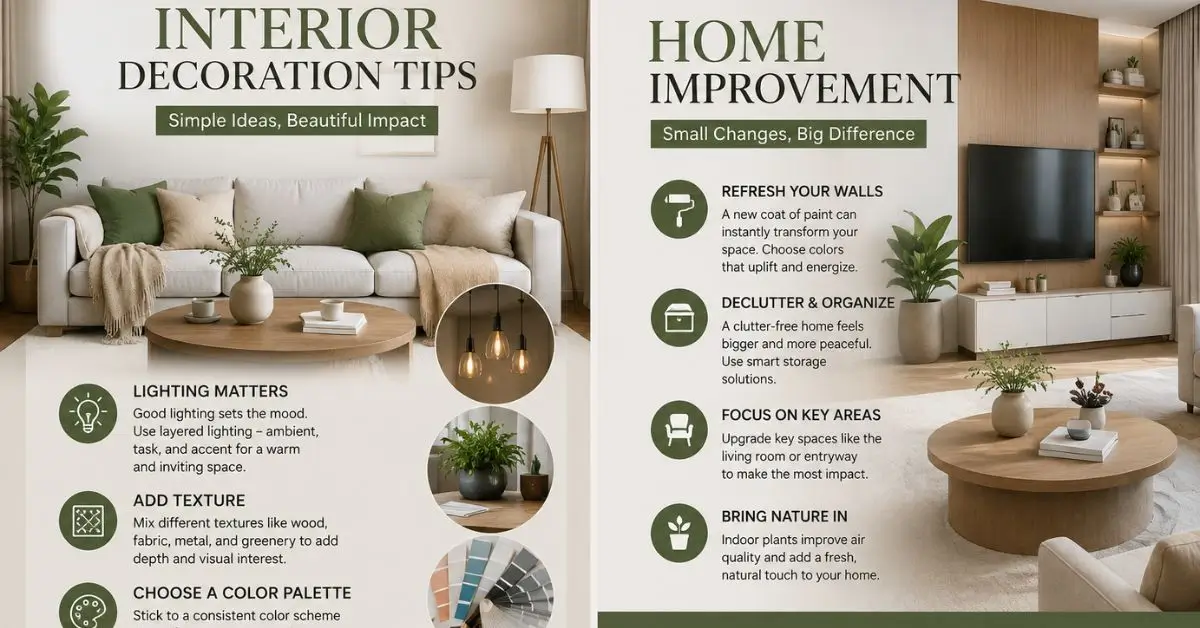
Most people know their home could look better. The harder part is knowing what specifically needs to change and in what order. Scrolling through interior design inspiration is easy. Translating that inspiration into actual decisions about your actual rooms is where most people get stuck.
The problem is not taste. Most people have good instincts about what they find beautiful. The problem is the gap between that instinct and the practical knowledge of which changes produce real improvement versus which ones waste money and leave the space still feeling unsettled.
Interior decoration tips mintpaldecor bridges this gap with grounded, practical guidance built around how spaces actually function and how specific design decisions produce predictable outcomes. This guide covers those tips room by room with honest guidance you can start using today.
Interior decoration tips mintpaldecor refers to the practical home decoration guidance provided through the mintpaldecor platform, covering color selection, lighting improvement, furniture arrangement, textile choices, plant styling, and room-specific techniques that help homeowners create more cohesive, comfortable, and visually intentional living spaces. The approach focuses on foundational design decisions that produce lasting improvement rather than trend-driven product recommendations.
The interior decoration tips from mintpaldecor focus on the decisions that actually make rooms work: lighting, proportion, color coherence, and editing before adding. These apply across every room and every budget. This guide covers the specific tips for each main room with honest cost and implementation guidance.
Before any specific tips by room, three foundational principles run through the entire mintpaldecor approach to interior decoration. Understanding these makes every specific tip more meaningful.
Edit first, then add
Most rooms that feel cluttered or visually unsettled have too many things competing for attention. Removing what does not contribute to the room’s purpose or character almost always produces more visible improvement than any new purchase. This is the first action to take in any room before spending a dollar.
Light transforms everything
The quality of light in a room affects how every other element in it looks and feels. Warm, layered, dimmable lighting produces a fundamentally different result than flat overhead illumination regardless of the furniture quality or decor choices. Improving lighting before spending on other elements is nearly always the higher-return decision.
Proportion matters more than style
A room with furniture at the wrong scale, a rug that is too small, or artwork hung at the wrong height will always feel slightly off, regardless of how individually beautiful each piece is. Getting proportions right creates the foundation that makes every other design decision work properly.
Set a clear focal point before arranging anything
Every successful living room has a primary focal point. A fireplace, a featured wall, a large piece of art, or a media wall can all serve this purpose. Furniture should face toward and relate to this focal point rather than floating without direction.
The most common living room mistake is pushing furniture against walls. This leaves an awkward empty center and removes the conversational intimacy that makes a living room comfortable to be in. Pulling furniture into a grouping around the focal point produces a more human-scaled arrangement.
Use a rug that is actually large enough
Interior decoration tips mintpaldecor consistently emphasize this point. A rug that is too small for the furniture arrangement makes the entire room feel unresolved. The front legs of all main seating pieces should sit on the rug, which in most American living rooms means a minimum of 8 by 10 feet.
When uncertain between two sizes, choose the larger. A rug that extends generously under furniture always looks more intentional than one barely touching the furniture’s edges.
Layer three light sources at minimum
A single overhead light creates flat, institutional lighting that makes rooms feel like waiting rooms rather than homes. Adding a floor lamp in one corner, a table lamp on a side surface, and controlling the overhead with a dimmer creates an immediately improved atmosphere.
This layered approach costs $100 to $200 for quality additions and makes more difference to how a living room feels than almost any furniture purchase at the same price point.
Add one statement plant
A single large plant in a well-chosen pot makes more visual impact than multiple small plants scattered around. A monstera, rubber plant, or fiddle leaf fig placed in a corner with adequate light adds organic texture and warmth that no artificial element replicates convincingly.
| Room | Best First Change | Cost Range | Visual Impact |
|---|---|---|---|
| Living Room | Add layered lighting | $100 to $200 | Very High |
| Living Room | Upsize the rug | $150 to $400 | Very High |
| Bedroom | Ceiling-height curtains | $50 to $150 | High |
| Bedroom | Quality bedding | $80 to $200 | High |
| Kitchen | Counter declutter | $0 | Very High |
| Kitchen | Under-cabinet LED | $30 to $80 | High |
| Bathroom | Mirror replacement | $80 to $250 | Very High |
| Bathroom | Counter tray | $15 to $40 | Medium to High |
| All Rooms | Warm bulb switch | $20 to $40 | High |
| All Rooms | Statement plant | $30 to $80 | Medium to High |
Build the design around the bed
The bed is both the functional and visual center of any bedroom. Quality bedding in a thoughtful color scheme, a bed appropriately sized for the room, and a headboard that gives the bed visual weight are the three highest-return bedroom decoration investments.
High-quality cotton or linen bedding in a neutral tone with one or two coordinating elements creates a hotel-quality visual result without requiring any other changes. This single upgrade changes how the bedroom reads more than most other changes combined.
Hang curtains close to the ceiling
One of the most practical interior decoration tips mintpaldecor offers for bedrooms is this: hang curtain rods as close to the ceiling as possible rather than at the top of the window frame.
This elongates the visual height of the room, makes the ceiling feel taller, and the window feel larger. The curtains cost the same. The installation is identical. The visual result is dramatically more spacious.
Create symmetry on both sides of the bed
Matching or closely coordinated bedside tables with matching lamps create the visual balance that makes bedrooms feel calming and complete. The pieces do not need to be identical, but they should share scale, height, and visual weight.
A bedroom where one side has a tall lamp and the other has none always reads as unfinished, regardless of how beautiful the bed itself is.
Simplify the color palette
Bedrooms with multiple competing colors rarely feel restful. A simple palette of one dominant neutral, one secondary tone, and one accent used in bedding, textiles, and small accessories creates the kind of visual coherence that promotes rest.
Clear every counter before styling
Kitchen counters accumulate objects gradually until they function primarily as storage rather than work surfaces. Before making any styling decisions, remove everything and replace only what is used daily. What remains after this exercise is almost always far less than what was there before.
The visual improvement from this single step costs nothing and is often more dramatic than any decorative purchase would produce.
Style one area deliberately
Rather than styling every kitchen surface, choose one visible counter area as the deliberate styling zone. A wooden cutting board, a small herb plant, and a ceramic oil vessel creates a domestic still life that adds warmth and character without visual noise throughout the space.
Install under-cabinet LED lighting
Under-cabinet LED strips improve task lighting during food preparation and transform the kitchen atmosphere in the evening. Plug-in options require no electrical work and cost $30 to $80 for most kitchens. The warm glow across the countertop this creates is one of the most effective kitchen atmosphere improvements available at any price.
Replace the mirror as your first move
The builder-grade mirror in most bathrooms is the single element whose replacement produces the greatest visual change per dollar spent. A frameless oversized mirror, a framed mirror in a complementary finish, or a backlit mirror changes the character of a bathroom immediately.
This upgrade costs $80 to $250 and requires only basic wall-mounting. The visual difference is typically dramatic.
Use a tray to create visual intention
A ceramic or stone tray on the bathroom counter containing hand soap, a small candle, and a simple plant creates a moment of visual intention in what is usually a purely functional space. Objects on a tray read as styled. The same objects without a tray read as accumulated clutter.
This is a $15 to $40 change that produces disproportionate visual improvement.
Treat towels as a design element
Matching towels displayed consistently, whether folded neatly on a bar or rolled in a basket, add color and texture to a bathroom at minimal cost. The hotel-quality bathroom experience most people admire comes largely from this simple consistency of presentation.
Build your palette from what you already love
The easiest path to a cohesive color palette is identifying a color already present in artwork, a rug, or a piece of furniture you genuinely love and building from there. This produces more naturally harmonious results than selecting colors in isolation from paint chips.
Switch to warm bulbs throughout living spaces
Switching from cool or daylight-temperature bulbs to warm white bulbs in the 2700K range costs $20 to $40 for a complete room and produces an immediate transformation in atmosphere. This is consistently one of the highest-return decoration actions the mintpaldecor tips include.
Apply the 60-30-10 color proportion rule
Sixty percent of the room in a dominant neutral. Thirty percent in a secondary color. Ten percent in an accent. This proportion produces visual balance that feels instinctively correct. Apply it across walls, furniture, and accessories together rather than to any single element.
The interior decoration tips from mintpaldecor consistently return to a core truth. The most impactful decoration decisions are almost never about acquiring more things. They are about lighting quality, color coherence, proportion, and editing what already exists before adding anything new.
Start with the single tip that addresses your biggest visual frustration in your most-used room. Apply it fully and evaluate the result before moving to the next change. That focused approach produces more satisfying outcomes than scattered improvements across multiple rooms that never quite come together.
If this guide was helpful, take a look at our related articles on how to choose the right paint color for any room and the best budget-friendly home improvements with real visual impact. Both give you the practical next steps for continuing your interior improvement journey.
They are practical home decoration insights from the mintpaldecor platform covering lighting, color, furniture, and room-specific styling, focused on foundational decisions that produce lasting visual improvement across different styles and budgets.
Improving lighting quality. Layered warm lighting with floor lamps, table lamps, and a dimmer transforms any room more than furniture or decor purchases at the same cost.
Declutter, switch to warm bulbs, use a correctly sized rug, and hang curtains at ceiling height. These four changes cost under $100 combined and produce substantial visual improvement.
A rug that is too small for the furniture arrangement. The front legs of all main seating should sit on the rug as a minimum standard to anchor the space properly.
Use two to three colors consistently across every room in varying proportions. One neutral, one secondary tone, and one accent creates visual flow that makes the home feel designed rather than random.
Lighting and styling changes deliver real improvement for $100 to $300. A fuller update with textiles and accessories typically runs $300 to $600.