
 By James Anderson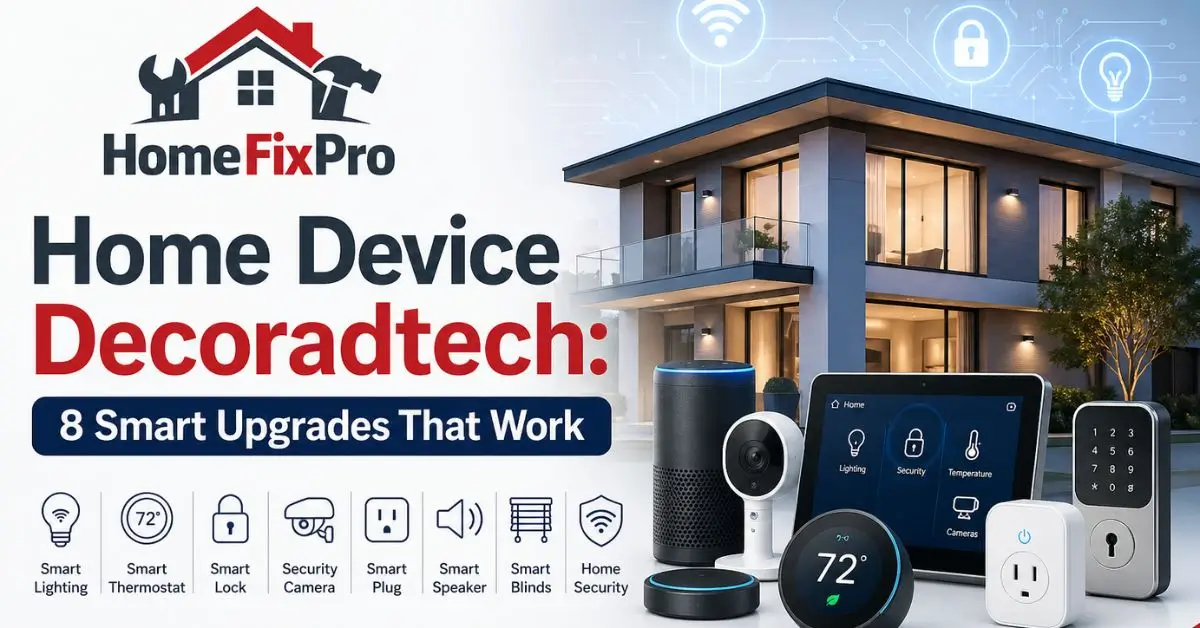
Most homes today sit somewhere between two worlds. One side is practical: heating, lighting, security, and daily function. The other side is personal: style, comfort, and how a space actually feels to live in.
For a long time, technology and home decor felt separate. You had smart gadgets in one corner and decorative choices in another. They rarely worked together.
That gap is closing fast. Home device decoradtech is changing how people think about both sides at once.
Home device decoradtech describes the blend of functional smart home devices with intentional interior design choices. It covers tech-integrated products like smart lighting, display frames, voice-controlled appliances, decorative air purifiers, and connected fixtures that improve how a home looks and works at the same time. The goal is simple: make everyday technology feel like a natural, attractive part of the home rather than an awkward addition.
In this guide, you will learn which devices genuinely deliver on both fronts, how to choose them wisely, and where to start without overcomplicating your home.
- Home device decoradtech combines smart tech with home aesthetics
- The best devices serve a function and look good doing it
- Start with lighting, displays, speakers, and air quality devices
- Avoid gadgets that look impressive but solve no real daily problem
- Match devices to your room style, not just your Wi-Fi network
- Plan placement before buying so devices fit the space naturally
Not every smart device qualifies.
A plastic hub stuck on a wall with tangled cables is smart technology. It is not decoradtech. A sleek wall-mounted display that blends into your living room style while showing art, weather, and calendar updates is both functional and design-aware. That distinction matters.
The best home device decoradtech choices share three qualities:
1. They solve a real daily problem
Better air, better light, better security, better sound. Not just novelty.
2. They fit the space visually
They do not stand out in a bad way. They look like they belong.
3. They are easy to use every day
If a device needs too much setup or app management to function normally, it loses value fast.
This is the filter worth applying before buying anything labeled “smart” or “connected.”
A realistic US example: in a mid-century modern apartment in Austin, a matte black smart thermostat on a white wall adds both function and visual coherence. A bulky white plastic unit with a bright LED display would work just as well technically but would look completely out of place.
The right device choice depends on your home style, not just your tech preferences.
Here is a practical look at devices that combine smart function with real design value.
Lighting is the single most powerful design tool in any room.
Smart lighting goes further by letting you control brightness, color temperature, and timing from your phone, voice assistant, or automated schedule. That means warmer, dimmer light in the evening without touching a switch. Brighter, cooler light when you are working or cooking. And everything in between.
The design value comes from choosing fixtures that match your space. A smart bulb in a cheap fixture still looks like a cheap fixture. But a well-chosen pendant light or recessed trim with smart control looks intentional from every angle.
What to look for:
- Warm to cool color range for flexibility
- Dimming capability without flicker
- Compatibility with your existing assistant or hub
- Fixture design that suits your room style
Pros: high daily impact, easy to adjust, energy-efficient
Cons: cheap bulbs can give poor light quality or inconsistent color
Smart lighting is usually the best starting point for any decoradtech upgrade because it affects every room, every day.
This is one of the most direct expressions of home device decoradtech thinking.
Products like the Samsung Frame TV or standalone smart art displays look like framed artwork when not in active use. They show curated art, family photos, or design collections on a matte screen that mimics the look of a canvas or print.
When you want to watch something, it functions as a normal display. When you do not, it becomes part of the wall.
This solves a real design problem most homeowners face: a large black rectangle on the wall that looks dead when the TV is off.
What to look for:
- Matte anti-glare screen finish
- Art mode or ambient display option
- Frame options that match your decor style
- Sensor-based auto-brightness adjustment
Pros: strong visual upgrade, functional display, doubles as art
Cons: higher price than a standard TV, art subscription may add ongoing cost
If your living room or bedroom has a visible TV wall, this upgrade makes a meaningful difference.
Voice assistants are now common in most households, but many smart speakers still look like tech products dropped into a home.
Better options exist. Brands like Sonos, Bang and Olufsen, and others offer speakers that prioritize acoustic performance and visual design together. They blend into bookshelves, sit confidently on countertops, and do not demand attention with flashing lights or boxy shapes.
The function is the same: music, voice control, timers, reminders, and smart home management. The difference is that a well-designed speaker feels like a home object, not a device.
What to look for:
- Neutral or natural finish that suits your space
- Sound quality that matches the room size
- Voice assistant compatibility
- Easy placement without visible cables if possible
Pros: everyday usefulness, good sound, strong design options available
Cons: premium design usually means premium price
A good speaker in the right finish can anchor a shelf or counter the way a lamp or plant does, without calling unnecessary attention to itself.
Air quality matters more than most people realize. But traditional air purifiers often look like medical equipment.
A new category of design-forward air purifiers changes that. Products in this space use quiet motors, compact form factors, and neutral or attractive finishes to deliver real air filtration without dominating the room.
Some look like modern sculptures. Others are designed to blend into minimal or Scandinavian-style interiors. A few include built-in air quality displays that are subtle enough to feel like a design feature rather than a dashboard.
What to look for:
- True HEPA filtration for real performance
- Low noise at normal operating speeds
- Size appropriate for your room
- Finish and shape that works with your decor
Pros: health benefit plus visual fit, quiet operation in quality models
Cons: filter replacement adds ongoing cost, larger rooms need larger units
This is a good example of decoradtech done right: a device that improves your daily environment and looks like it belongs in your home.
A thermostat sits on a prominent wall in most homes. That makes the design choice more visible than people often consider.
Modern smart thermostats like the Ecobee and Google Nest have moved well past the old beige box look. They use clean displays, minimal interfaces, and finishes that work with modern interiors.
The function is strong: better temperature control, scheduling, remote access, and energy tracking. The design benefit is that they no longer look like an afterthought on the wall.
What to look for:
- Display style that works with your wall color and trim
- Compatibility with your HVAC system
- Scheduling and remote access features
- Energy usage reporting
Pros: strong function, cleaner look than older thermostats, real energy savings
Cons: not every system is compatible, some setups need a C-wire
If you still have an old plastic thermostat on the wall, replacing it with a modern smart model improves both function and appearance at the same time.
Here is a quick comparison to help you decide where to start:
| Device | Design Value | Daily Function | Typical US Cost | Best Room |
|---|---|---|---|---|
| Smart lighting and dimmers | High | High | $30–$400 | Every room |
| Digital art display or smart frame | Very High | High | $700–$2,500+ | Living room, bedroom |
| Design-forward smart speaker | Medium–High | High | $150–$800+ | Living room, kitchen |
| Decorative air purifier | Medium–High | High | $100–$500+ | Bedroom, living room |
| Smart thermostat | Medium | Very High | $100–$300 | Hallway, common area |
| Smart mirror | High | Medium | $200–$1,000+ | Bathroom, bedroom |
| Motorized smart shades | High | High | $150–$600 per window | Living room, bedroom |
| Smart kitchen display | Medium | High | $100–$300 | Kitchen |
A smart mirror looks like a standard mirror until you need it.
Built-in displays can show the time, weather, calendar, news, or fitness data while you get ready in the morning. Higher-end versions include voice control and even video calling.
The design value is strong because the mirror functions as a normal reflective surface when the display is off. It does not look like a gadget. It looks like a mirror.
What to look for:
- Display size appropriate for the mirror size
- Frameless or framed finish that suits the room
- Brightness adjustment for different times of day
- Privacy features for video-enabled models
Pros: high design value, useful morning information hub
Cons: higher price, some require professional installation
This is a standout home device decoradtech choice for bathrooms and master bedrooms where the mirror is already a focal point.
Window treatments affect light, privacy, temperature, and aesthetics all at once.
Motorized smart shades add remote or automated control to that equation. You can open or close shades on a schedule, from your phone, or with a voice command. That makes solar management effortless and gives large windows a clean, consistent look throughout the day.
From a design perspective, motorized shades almost always look better than manually operated ones because there are no cords, loops, or uneven pulls to manage.
What to look for:
- Fabric options that suit your light and privacy needs
- Battery or hardwired motor depending on your setup
- App or voice control compatibility
- Clean installation without visible hardware
Pros: strong design payoff, daily comfort improvement, reduces heat gain
Cons: cost rises quickly across multiple windows
Start with the room that gets the most sun or the most attention. You do not need to automate every window at once.
The kitchen is one of the most active rooms in the house and one of the least organized digitally.
A smart kitchen display can show recipes, timers, video calls, music controls, and grocery lists in one place. The best ones are compact, easy to mount or stand, and designed to sit cleanly on a counter without looking like a tablet propped against the backsplash.
Some models integrate with smart appliances for oven preheating, coffee scheduling, and grocery tracking.
What to look for:
- Compact design appropriate for counter space
- Recipe and timer function that works hands-free
- Finish that suits your kitchen style
- Speaker quality for kitchen use
Pros: genuinely useful in the kitchen, reduces phone-touching while cooking
Cons: a standard tablet does much of the same job for less
This is a practical and underrated decoradtech upgrade for households that spend real time cooking.
Buying devices one at a time without a plan often creates a home full of disconnected gadgets.
A smarter approach:
Start with the room you use most. Usually the living room, bedroom, or kitchen. Pick one or two devices that improve comfort and visual coherence at the same time.
Choose a consistent finish or color language. Matte black, brushed nickel, warm wood tones, or white pick a direction and stay with it. Mixed finishes in the same room rarely look intentional.
Check compatibility before buying. Not every smart device works with every assistant, hub, or system. Confirm before spending.
Plan cable management. Visible cables undo the design benefit of even the best devices. Wall-mounted devices need recessed outlets or covers. Countertop devices need short, tidy cables.
Add one device at a time. It is easier to judge whether something works visually and functionally when you are not changing five things at once.
This is how the best-looking smart homes actually get built. Not in one shopping session, but with consistent choices made over time.
Not every product in this space delivers on both sides of the decoradtech promise.
Avoid:
- Brightly lit devices with no brightness control in dark rooms
- Gadgets with visible logos or branding on the face
- Cheap smart plugs and adapters left visible in public areas
- Plastic-heavy devices in rooms with natural material finishes
- Products that require constant app updates to function normally
Be cautious with:
- Very new product categories with limited review history
- Subscription-dependent devices where content access costs extra
- Smart devices that only work with one proprietary ecosystem
The goal is a home that works better and looks better. If a device creates more friction than it removes, it does not belong in the plan.
The best version of home device decoradtech is not about having the most connected home. It is about having a home where the technology feels like it belongs.
When smart devices improve comfort, reduce friction, and look like they were chosen with care, the result is a home that works better every day without feeling like a showroom or a tech lab.
Start with one room. Pick devices that solve a real problem and fit the space. Build from there.
It is the combination of smart home technology with intentional interior design. The goal is devices that improve daily function lighting, air, temperature, sound while looking like a natural part of the home, not a tech add-on.
Smart lighting is usually the best first step. It affects every room, costs less than most upgrades, and immediately changes how the home looks and feels. A smart thermostat is also a strong early choice for homes with central heating or cooling.
Yes, when chosen carefully. Design-forward speakers, art-mode displays, and motorized shades genuinely improve a room. Generic plastic gadgets usually create visual clutter even when they work well technically.
The range is wide. Smart bulbs start under $30. Smart frame TVs and motorized shades can run into the hundreds or more. Start with lighting and a thermostat, then add higher-cost items when the budget allows.
Yes. Most decoradtech devices need no structural changes or special wiring. Smaller homes often benefit the most since good lighting and clean-looking devices make compact spaces feel more intentional.
Look for finish options that match your existing hardware. Check whether screens or indicator lights stay visible when idle. Read reviews that mention design quality, not just technical specs. Treat each device like furniture, not just a gadget.